
Regulatory Pathway for Clinical Trials in India: From Submission to Approval
“Navigating India’s clinical trial regulatory landscape demands precision, expertise, and strategic foresight. At CLINEXEL, we turn regulatory complexity into a clear, compliant pathway to approval”, mentions Dr. Deepa Arora, Founder, Director and CEO of CLINEXEL. India has rapidly positioned itself as a global hub for clinical trials, offering cost advantages, diverse patient populations, and a highly skilled medical workforce. With the implementation of the New Drugs and Clinical Trials Rules (NDCTR), 2019, the country has established a transparent and time-bound Guidelines for clinical trials in India. These rules have brought India closer to international standards, aligning trial conduct with Good Clinical Practice (GCP) while safeguarding patient rights and safety (Singh et al, 2020).
For pharmaceutical and biotechnology companies, as well as regulatory professionals, understanding how to navigate the CDSCO approval process, ethics committee requirements, and CTRI registration is crucial. This blog offers a comprehensive step-by-step overview of the Guidelines for Clinical Trials in India clinical trial approval process in India, highlighting key timelines, compliance requirements, and post-trial obligations. Whether you are a sponsor planning a global trial or a regulator overseeing compliance, this guide offers evidence-based insights into how India’s regulatory system ensures efficiency and ethical rigor.
The Regulators
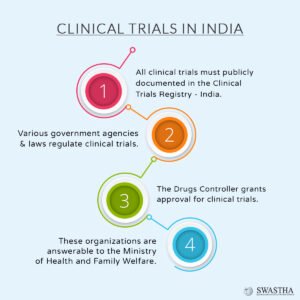
- Central Drugs Standard Control Organization (CDSCO): The Central Licensing Authority (CLA) reviews and approves clinical trial applications (CTAs) under NDCTR, 2019.
- Institutional Ethics Committees or Independent Ethics Committees (IECs/ECs): Must be registered with the Department of Health Research (DHR) under the Ministry of Health and Family Welfare (MoHFW) and operate under ICMR National Ethical Guidelines (2017).
- CTRI (Clinical Trials Registry–India): Prospective registration is required before the first participant enrolment.
Ms Shivani Nayak, Head of Regulatory at CLINEXEL says “The regulatory journey for initiating a clinical trial in India generally follows these steps: submission via Form CT-04 to CDSCO, simultaneous ethics committee submission, review by Subject Expert Committees (SECs), issuance of Form CT-06 (approval) or CT-05 (rejection), import licence if applicable, then site initiation and patient recruitment”
The Step-by-Step Guidelines for Clinical Trials in India
1) Determine your product and pathway
Confirm whether your product is a new drug, investigational new drug (IND), or a biologic. NDCTR also enables accelerated approvals under defined conditions while maintaining safety and data integrity obligations (Singh et al, 2020; CDSCO, 2024).
2) Prepare for a pre-submission interaction (optional but helpful)
A structured consultation with CDSCO can de-risk queries. Prepare your clinical development plan, protocol synopsis, CMC (Chemistry, Manufacturing, and Controls) summary, and nonclinical overview aligned with ICH/NDCTR expectations.
3) Compile a very high-quality CTA for submission through the SUGAM portal
Sponsors/CROs submit CTAs via SUGAM (online application and tracking). As part of the submission, sponsors are expected to provide the following core documents:
- Form CT-04 (CTA) and required schedules/forms
- Full protocol, IB, CMC, nonclinical package
- EC approvals (site-wise), investigator credentials, site infrastructure
- Insurance and injury compensation plan (as per NDCTR)
- CTRI registration details (or plan for prospective registration before FPFV)
Guidance and user manuals are available on the CDSCO site (CDSCO).
4) Ethics governance: register, review, and oversee
- EC registration with DHR (Naitik portal) is mandatory; registration validity is typically five years with renewal timelines defined (Venugopal et al., 2023; CDSCO, 2019).
- ECs apply ICMR’s National Ethical Guidelines (2017) risk minimization, consent, privacy/confidentiality, and community considerations (ICMR, 2017; Mathur & Swaminathan, 2017).
- EC records and decisions should be documented and reported per NDCTR (Singh et al., 2020).
5) Submit the CTA; understand the clocks
Under the NDCTR, the CLA aims to decide within 30 working days (for India-developed trials) or 90 working days (for global trials). Deemed approval mechanisms can apply if there’s no communication within the defined period, subject to notification via specified forms (CDSCO, 2019).
What regulators look for:
- Risk-appropriate design, endpoints, and monitoring
- Participant safety protections and compensation provisions
- Data integrity and GCP compliance across the trial lifecycle
6) Prospective CTRI registration
CTRI requires prospective registration before the first participant, first visit (FPFV). Analyses indicate that universal compliance still requires improvement, underscoring the need for sponsors to integrate CTRI timing into startup checklists (Rao et al., 2018; Singh et al., 2024).
7) Site initiation and ongoing obligations
Once approvals are in place:
- Safety reporting: NDCTR defines serious adverse event (SAE) timelines, medical management, and compensation triggers. Free medical care for study-related injuries is mandatory; compensation is calculated using NDCTR’s schedule-based formulae (Singh et al., 2020; CDSCO, 2019).
- Protocol amendments: Submit substantial amendments via SUGAM with EC approvals.
- Site/PI changes: Processed online; certain actions follow deemed-effective logic per updated notices (CDSCO).
- Monitoring & data integrity: Maintain ALCOA+ principles; ECs and CLA may inspect.
- Regulatory Notifications: Submit regulatory notifications, annual status and safety updates as specified in NDCTR 2019
8) Trial close-out, results, and post-trial access
- Post-trial access may be recommended by investigators and considered by CLA when appropriate under NDCTR (Government of India, 2019).
- Results disclosure should follow registry requirements and ethical obligations toward participants and the public.
“From dossier submission to first-patient-in, we guide you through every regulatory step, transforming uncertainty into confidence and compliance into competitive advantage”, Dr. Arora further mentions.
Key compliance pillars (what keeps you inspection-ready)
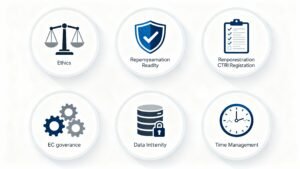
- Ethics first: Operate according to ICMR 2017 principles; keep consent materials clear and context-sensitive (Mathur &Swaminathan, 2017; ICMR, 2017).
- Compensation readiness: Have insurance and a documented algorithm for injury-related compensation and medical management (Singh et al., 2020).
- CTRI discipline: Register prospectively; ensure records match CDSCO permissions to avoid transparency gaps.
- EC governance: Verify DHR registration status, renewal dates, SOPs, and quorum specifics before site activation (Venugopal et al., 2023).
- Data integrity: Demonstrate end-to-end controls in monitoring, eSource/ePRO, audit trails, and vendor oversight.
- Use the clocks wisely: Plan for 30-/90-day decision windows and deemed-approval notifications; build buffers for EC reviews and site contracting.
Key Insights
- Expedited/waiver scenarios: NDCTR allows accelerated approval or local trial [DA4] [sc5] waivers for specific public health needs. This waiver is part of a government effort to accelerate the introduction of innovative treatments and streamline access to life-saving drugs for patients, especially those with rare diseases, that have already been approved in these specified markets. Justify with robust global/Indian data and plan for enhanced safety monitoring (CDSCO, 2024).
- Academic/Investigator-Initiated Trials (IITs): Process differences and administrative hurdles can delay IITs; strengthening EC administration and CTRI habits improves compliance (Bhide et al., 2023).
- Quality culture: Peer-reviewed analyses emphasize that India’s improvements hinge on consistent application of rules at sites and ECs, pre-study governance checks reduce post-initiation remediation (Singh et al., 2020; Venugopal et al., 2023).
How CLINEXEL can help (CRO partner advantage)
Launching and running a trial in India demands agility with SUGAM workflows, EC/DHR requirements, CTRI nuances, and NDCTR timelines. Clinexel’s cross-functional teams integrate regulatory strategy, medical writing, biostatistics, pharmacovigilance, site management, and data management, so you meet timelines without compromising safety or quality.
- Regulatory & medical writing: End-to-end CTA dossiers (Form CT-04 and supporting schedules), responses to queries, protocol/IB/ICF development aligned to NDCTR and ICMR ethics.
- EC & CTRI enablement: Rapid EC pack assembly and CTRI prospective registration discipline across sites.
- Safety & compensation: SAE case processing and documentation aligned with NDCTR; compensation calculations and medical management documentation.
- Operational depth: Start-up through close-out, including site/PI changes on SUGAM, amendment strategy, and inspection readiness.
- Quality by design: Robust CDM/biostats oversight; audit-ready documentation and data integrity controls.
“India’s evolving regulatory framework offers immense opportunity. With the right partner like CLINEXEL, your clinical development journey can move faster, smarter, and fully aligned with CDSCO and ethics committee expectations,” quotes Dr. Mukesh Kumar, Chief Scientific Officer at CLINEXEL.
Conclusion:
India’s clinical trial approval process has transformed into a streamlined, transparent, and globally aligned regulatory framework. By following the guidelines for clinical trials in India, sponsors can ensure ethical rigor, participant safety, and regulatory compliance. With the NDCTR 2019, the CDSCO provides defined timelines for approvals, while mandatory CTRI registration and stricter oversight by ethics committees ensure accountability and participant safety (Singh et al., 2020). These changes make India a preferred destination for clinical research not only because of its cost advantages, but also because of its robust compliance system and growing international trust.
For sponsors and regulators, success in India hinges on strict adherence to ethical guidelines, patient protection rules, and transparent trial reporting. This requires experienced hands to manage submissions, site activation, safety reporting, and inspections effectively.
CLINEXEL, a trusted CRO in India, combines regulatory expertise, operational depth, and strong site networks to help sponsors fast-track approvals and conduct trials in full compliance with NDCTR.
Planning to initiate a clinical trial in India? Partner with CLINEXEL to navigate the regulatory pathway, reduce startup delays, and ensure NDCTR-compliant trial execution.
Contact us at info@clinexel.com
Key Takeaways:
- India’s regulatory pathway is well-defined under the New Drugs and Clinical Trials Rules, 2019 (NDCTR), offering faster approvals and stronger patient protections.
- Central Drugs Standard Control Organization (CDSCO) is the main regulatory authority, while Ethics Committees (ECs) and Clinical Trials Registry–India (CTRI) play key roles in ensuring compliance and transparency.
- Approval timelines are predictable: ~30 working days for India-developed trials and ~90 working days for global trials.
- Mandatory CTRI registration before first patient enrolment improves trial transparency and credibility.
- Compensation and medical care for trial-related injury are strictly regulated, reinforcing participant safety.
- Compliance pillars include ethics, insurance, and compensation readiness, CTRI discipline, EC governance, and robust data integrity.
- Partnering with an experienced CRO like CLINEXEL can help sponsors navigate regulatory requirements, accelerate trial startup, and maintain inspection readiness.
References:
- Government of India, Central Drugs Standard Control Organization (CDSCO). (2019). New Drugs and Clinical Trials Rules, 2019. https://cdsco.gov.in/opencms/resources/UploadCDSCOWeb/2022/new_DC_rules/NEW%20DRUGS%20ANDctrS%20RULE%2C%202019.pdf
- Indian Council of Medical Research (ICMR). (2017). National Ethical Guidelines for Biomedical and Health Research Involving Human Participants. https://ethics.ncdirindia.org/asset/pdf/ICMR_National_Ethical_Guidelines.pdf
- CDSCO. Clinical trials (SUGAM/OCTAMS notices and user resources). https://cdsco.gov.in/opencms/en/Clinical-Trial/clinical-trials/
- Government of India, Central Drugs Standard Control Organization (CDSCO). (2019). New Drugs and Clinical Trials Rules, 2019. https://cdsco.gov.in/opencms/resources/UploadCDSCOWeb/2018/UploadPublic_NoticesFiles/Orde101%20NDCT.pdf
- Rao, M. V. V., Maulik, M., Gupta, J., Panchal, Y., Juneja, A., Adhikari, T., & Pandey, A. (2018). Clinical Trials Registry–India: an overview and new developments. Indian Journal of Pharmacology, 50(4), 208-211.Bakhla, A., Sinha, P., & Sharma, R. (2025). Clinical trial registration in India: 12% of drug regulatory trials are not registered with CTRI. Health Research Policy and Systems, 23, Article 12. https://health-policy-systems.biomedcentral.com/articles/10.1186/s12961-025-01288-x
- Mathur, R., & Swaminathan, S. (2018). National ethical guidelines for biomedical & health research involving human participants, 2017: A commentary. Indian Journal of Medical Research, 148(3), 279-283.
- Singh, N., Madkaikar, N. J., Gokhale, P. M., & Parmar, D. V. (2020). New drugs and clinical trials rules 2019: Changes in responsibilities of the ethics committee. Perspectives in clinical research, 11(1), 37-43.
- Venugopal, B., Nagar, A., Kumar, Y., & Sinha, S. (2023). Overview of the National Ethics Committee Registry for Biomedical and Health Research in India: Stepping up to safeguard the ethical aspect of research involving human participants. Indian Journal of Pharmacology, 55(4), 251-256.
- Bhide, S., Patil, S., Sohal, A., Kadhe, N., Munshi, R., Phirke, C., … & Patil, R. (2023). Investigator knowledge, awareness, and registrations of academic clinical trials with the clinical trial registry of India: An observational study. Perspectives in Clinical Research, 14(4), 187-193.
Authors:

Dr. Deepa Arora- CEO- CLINEXEL ( https://www.linkedin.com/in/deepaarora2019/ )
Dr Deepa is a physician with 25+ years of industry experience in leadership positions with pharma in Clinical Development, Medical Research, and Drug Safety departments.
Dr. Deepa led an industry consortium for the implementation of additional risk minimization measures in Europe. Her experience includes the development and execution of clinical development strategy and conducting clinical trials for NCEs, biosimilars, vaccines, complex generics, and repurposed drugs.
Deepa has experience in interacting with various regulators- USFDA, EMA, MHRA, MEB, Health Canada, WHO, TGA for scientific advice, pre-IND meetings, end of phase meetings to discuss clinical development path, clinical trial designs, and post-marketing commitments, including PMS/ Phase IV studies and paediatric investigation plan (PIP).

Dr. Mukesh Kumar– Chief Scientific Officer- CLINEXEL (https://www.linkedin.com/in/dr-mukesh-kumar-m-d-6223457/)
A Physician (MD) with over 25 years of deep expertise in clinical R&D, Dr Kumar’s career is a testament to innovation and excellence in clinical trials, clinical pharmacology, translational research, biopharmaceutics, and clinical development. His contributions have driven global product registrations across regulatory landscapes, including the USFDA, EMA, India, PMDA, and ROW regions.
Dr. Kumar’s illustrious career includes clinical R&D leadership roles at global pharmaceutical giants (Sanofi and Daiichi Sankyo) and large Indian pharma companies (CIPLA, DRL, and LUPIN), where he supported early and late phase clinical trials of innovative products, including repurposed drugs via 505(b)(2) path, complex generics, and biosimilars.
He has played a key role in transforming the R&D business through clinical risk mitigation strategies and high-quality clinical trial executions. With a proven track record of significant contributions in clinical development of over 100 successful product registrations in the U.S. and Europe, he has redefined efficiencies in clinical strategies by implementing cost-effective, innovative clinical trials and pharmacology studies.
As CLINEXEL’s CSO, Dr. Kumar oversees clinical trial operations (Phases I-IV) and clinical program management. His value-added support is available for CLINEXEL-managed clinical trials in optimizing clinical strategies, global clinical development, and driving impactful scientific negotiations for innovative therapies, biosimilars, and complex generics.
_____________________________________________________________________________________________________________________
CTRI registration, CTRI, SUGAM, CDSCO, NDCTR, ethics committee, CDSCO clinical trial approval process, NDCTR 2019 guidelines, SUGAM portal for clinical trials, CTRI registration process, ethics committee in clinical research, clinical trial documentation India, regulatory pathway for clinical trials, clinical trial regulations in India, CRO services in India, good clinical practice India, ICMR ethical guidelines 2017, CDSCO approvals, NDCTR compliance, patient safety in clinical trials, post-marketing surveillance India, regulatory affairs in clinical research,
Clinical research organizations in India, CRO services for clinical trials, India CRO regulatory expertise, end-to-end clinical trial support, Clinical development in India, CRO partners for clinical research, pharma regulatory compliance India, SUGAM portal for clinical trials, CTRI registration process, EC submission in clinical research, SAE reporting in clinical trials, compensation in clinical trials India, investigator site readiness India, clinical research compliance India, data integrity in clinical research, clinical trial startup process India, clinical trial regulations in India, CDSCO clinical trial approval process, NDCTR 2019 guidelines, clinical trial ethics committee India, regulatory pathway for clinical trials, clinical trial approval process in India, India clinical trial rules, clinical trial registration process India, clinical trial documentation India