
Planning to Conduct Clinical Trials in India? A Quick Regulatory Checklist and CRO Assessment Guide
The global clinical research market has been evolving rapidly, with sponsors increasingly outsourcing key development activities to Clinical Research Organizations (CROs). India has emerged as one of the most attractive destinations for clinical research outsourcing due to its diverse patient population, growing regulatory clarity, and cost advantages. Over the last decade, Indian CROs have expanded their service offerings; however, there are very few CROs that understand the global landscape, have experience working in cross-cultural environments in collaboration with global teams. In India, companies can conduct clinical trials ranging from early-phase studies, bioavailability/bioequivalence (BA/BE) studies, pharmacokinetic studies, clinical trials of complex generics to large-scale Phase III and post-marketing Phase IV clinical trials.
The introduction of the New Drugs and Clinical Trials Rules (NDCTR) 2019 marked a turning point for India’s research ecosystem by establishing clinical trial regulations on par with global ICH standards, thereby
ensuring greater transparency and well- defined timelinesThe focus has been on ensuring the safety of trial participants. The recent amendments made available through gazette notifications, like the requirement of CRO registration by CDSCO, potential for clinical trial waiver for the drugs for rare diseases, and shortening of timelines for certain studies, are an attempt to ease the business for Indian and outside Indian pharma companies while reinforcing quality standards, strengthening India’s reputation as a trusted research hub.
For pharma sponsors, biotech founders, and medical device innovators navigating this evolving landscape, understanding how to carefully select CRO partners in India, and how Indian CROs operate under local and international regulations is critical.
This blog explores the roles, regulations, advantages, and challenges of Contract Research Organizations in India, along with a practical checklist for choosing the right partner in 2025.
Why India’s CRO ecosystem matters now?
- To fully exploit India’s potential as one of the world’s most dynamic hubs for outsourced clinical development, sponsors need CRO partners who understand the local landscape. A large patient pool, wide disease diversity, experienced investigators, and a maturing regulatory framework have made Indian CROs valuable partners across drug, biologic, vaccine, and device research (Glickman et al., 2009). Local CROs play a critical role in providing tailored clinical trial services for India, including support for multinational clinical trials (MRCTs). As a local CRO, CLINEXEL brings extensive experience in delivering high-quality clinical trial services within India, ensuring that studies are conducted with cultural sensitivity, regulatory compliance, and operational efficiency.
- To take advantage of India’s cost-effective outsourcing ecosystem, sponsors are increasingly turning to the country’s CROs. Over the past decade, regulatory reforms have accelerated study start-up timelines, enhanced participant protections, and clarified expectations for both sponsors and vendors (Jhuria et al., 2025). These improvements have positioned India as an attractive destination for efficient, high-quality trials at reduced costs. Major global CROs such as IQVIA and Parexel have already established strong operations in India, particularly in areas like safety monitoring and data management, further underscoring the country’s strategic importance in global clinical development.
- CLINEXEL is a full member of AICROS as a CRO. Clinexel MRCTs- a hybrid approach built a similar framework as a large CRO, and we also take advantage of reducing costs.
“CLINEXEL stands out among Indian CROs for its combination of regulatory depth, operational agility, and global quality mindset, making it a trusted partner for sponsors looking to conduct efficient, compliant, and high-quality trials in India,” mentions Dr. Deepa Arora, Founder, Director and CEO of CLINEXEL.
- Educated professionals- GCCs, CRO pharma companies, India has emerged as a hub/ Global CoE.
- Capabilities to conduct specialized studies for incremental innovation..
- Clinical Pharmacology studies
India is one of the world’s most dynamic hubs for outsourced clinical development. A large patient pool, wide disease diversity, experienced investigators, and maturing regulatory frameworks have made Contract Research Organizations in India a valuable partner across drug, biologic, vaccine, and device research (Glickman et al., 2009). In the last decade, reforms have accelerated study start-up, strengthened participant protections, and clarified expectations for sponsors and vendors (Jhuria et al, 2025).
India offers a uniquely diverse and attractive landscape for clinical research. With a vast network of public and private hospitals, including municipal, trust-run, and corporate hospital chains, sponsors can access a wide range of sites suited for different therapeutic areas. Tertiary care centers, which are the medical schools, provide high-quality treatment and foster strong academic interest, ensuring both scientific rigor and clinical excellence.
India’s heterogeneity is another strength. Its patient population is ethnically, culturally, and socioeconomically diverse, which makes trial outcomes more globally relevant. Importantly, India still has large treatment-naïve patient pools, particularly in areas where early diagnosis is limited. Many patients with conditions such as early-stage cancer may often present late for diagnosis. Similarly, many times, patients referred to tertiary hospitals face challenges with regular follow-up due to long travel distances.
But this reality underscores India’s untapped potential. It enables CROs like CLINEXEL and sponsors to design studies that address real-world barriers, improve access, and generate data that is not only scientifically robust but also reflective of global patient diversity. This is why Contract Research Organizations in India like CLINEXEL play a critical role in bridging gaps between patient needs, site capabilities, and sponsor expectations.
“As a mid-sized CRO, CLINEXEL offers high responsiveness and cost-effective services, often preferred by small-to-medium biotech or med-tech companies who need personalized attention but global-standard compliance” Dr. Arora further adds.
CRO (Contract Research Organizations in India): Services Landscape in India
There are very few Contract Research Organizations – CROs in India, like CLINEXEL, that have in-house expertise to cover the end-to-end spectrum of clinical trial services. A comprehensive landscape of clinical trial services includes:
- Regulatory strategy & submissions: Dossiers and forms under the New Drugs and Clinical Trials Rules (NDCTR) 2019, management of the SUGAM e-portal, and liaison with the Central Licensing Authority (CDSCO).
- Clinical operations: Site identification, feasibility, start-up, monitoring including Risk-Based Monitoring and Risk-Based Quality Management (RBM/RBQM), vendor oversight, safety reporting, and trial logistics.
- Early phase & BA/BE: First-in-human (where appropriate), Phase I/II, and bioavailability/bioequivalence (BA/BE) projects in registered centers.
- Data functions: Data management, biostatistics, medical writing, pharmacovigilance, and submission-ready outputs (CSR, CTD modules).
- Real-world & digital: Registry studies, Post-Marketing Surveillance (PMS) /Phase IV, ePRO/eCOA, telemedicine, and decentralized trial elements where feasible (Mishra et al., 2009; Maroju et al., 2023).
Dr. Mukesh Kumar, Chief Scientific Officer at CLINEXEL, reiterates India’s regulatory commitment as stated by CDSCO: “The objective is to promote clinical research in India while ensuring that the rights, safety, and well-being of trial subjects are protected.”
Clinical Trial Guidelines 2025: Updates You Need to Know
The NDCTR 2019 set transparent timelines and processes for clinical trial permissions, compensation for trial-related injury, and explicit roles for Ethics Committees and BA/BE centers (Government of India, 2019).

1. New in force: CRO registration requirement
From April 1, 2025, CROs must be registered with the Central Licensing Authority before conducting clinical trials or BA/BE studies involving new or investigational drugs in humans. The 2025 amendment (G.S.R. 581(E)) adds Rules 38C–38E on registration, five-year validity, renewal procedures, and inspection authority (Ministry of Health and Family Welfare, 2024). This establishes clear quality expectations and provides sponsors with a stronger foundation for due diligence.
2. CTRI and ethics: Non-negotiables
- Prospective CTRI registration is mandatory before enrolling the first participant for trials that require regulatory approval (ICMR, 2017/2019; CDSCO, 2019).
- Ethics approval from a registered EC is required for each site (CDSCO, 2019).
- National ethical guidance emphasizes risk-benefit, informed consent, and community protections (ICMR, 2017/2019).
3. Global standards still apply
Indian trials are expected to comply with ICH-GCP E6(R2) and foundational quality principles: robust oversight, data integrity, and participant safety (ICH, 2016).
CLINEXEL’s CRO capabilities in India: what sponsors can expect
- Feasibility & enrollment velocity
Access to treatment-naïve and underrepresented patient groups can improve enrollment speed and external validity (Glickman et al., 2009). CROs with deep investigator networks can shorten start-up and activate high-performing sites first. - Clinical Development (Phase I–III) and BA/BE Expertise
India has significant Phase II/III and BA/BE capacity with standardized SOPs and established safety oversight. A 2025 review also highlights strengthening early-phase infrastructure across Asia, with India as a key contributor (Terada et al., 2023). - Digital-forward operations
eConsent, ePRO/eCOA, and telehealth use have grown, particularly for follow-ups and hybrid designs, improving compliance and data completeness (Mishra et al., 2009; Marijou et al., 2023). - Mature back-office functions
Data management, statistics, medical writing, and safety case processing are well-established, offering quality at competitive cost. - Devices and diagnostics
Many CROs now support medical devices and IVD studies, from clinical investigations to PMS, aligned with Indian device regulations and international expectations.
“We have hands-on experience with CDSCO submissions, ethics committee coordination, and NDCTR (New Drugs & Clinical Trials Rules, 2019) compliance, a key differentiator for international sponsors entering India”, adds Dr. Kumar.
Advantages of partnering with Clinical Research Organizations in India
- Scale and diversity for faster recruitment and meaningful subgroup analyses (Glickman et al., 2009).
- Cost-effectiveness without compromising standards, especially for data and safety operations (Jhuria et al, 2023).
- Regulatory clarity via NDCTR 2019 and the 2024/2025 CRO registration framework (Ministry of Health and Family Welfare, 2024).
- Growing early-phase capacity and BA/BE expertise (Terada et al., 2023).
- Digital enablement improving compliance and data quality (Mishra et al., 2009; Marijou et al., 2023).
Challenges of Clinical Trials and Risk Mitigation at CLINEXEL
- Site heterogeneity: Investigator experience and infrastructure vary.
Mitigation: rigorous feasibility, pre-study qualification, and tiered site activation.
- Operational variability: Start-up timelines can differ by state and institution. Mitigation: CROs with proven local regulatory know-how and escalation pathways.
- Data integrity risks: Especially with paper-to-eSource transitions.
Mitigation: ICH-GCP-aligned SOPs, audit-ready documentation, ALCOA+ principles, and RBQM.
- Participant protections & consent complexity: Multilingual, low-literacy settings need tailored consent approaches.
Mitigation: Culturally adapted ICFs, AV consent where required, and community engagement (ICMR, 2017/2019).
- Post-approval commitments: Pharmacovigilance signal management and PMS can be under-resourced.
Mitigation: Integrated PV teams, PASS (Post authorisation safety study)/PMS planning upfront.
How to select the right Clinical Research Organizations in India (sponsor checklist)
1) Verify regulatory status
- Confirm CRO registration with the CLA under NDCTR 2019 as amended (Rule 38C–38E).
- Check BA/BE center registration where relevant.
- Review inspection history and outcomes.
2) Evaluate operational maturity
- SOP library mapped to ICH-GCP E6(R2), NDCTR, and ICMR ethics guidance.
- Proven RBQM framework; centralized monitoring capabilities.
- QMS metrics: protocol deviation handling, CAPA effectiveness, database lock timelines.
3) Assess the feasibility strength
- Depth of investigator network in your indication.
- Historic screen-fail rates, enrollment curves, and site startup timelines.
- Realistic country allocation modeling (patients per site per month, attrition assumptions).
4) Test data & tech stack
- EDC experience (study build, mid-study updates), ePRO/eCOA workflows, API integrations.
- Data visualization and real-time risk dashboards.
- Secure, validated systems with audit trails (21 CFR Part 11-aligned where applicable).
5) Scrutinize medical writing & stats
- Peer-reviewed publication track record.
- CSR quality (consistency, CTD readiness), and rework rates.
- Statistical capabilities for adaptive/complex designs.
6) Ethics and CTRI competence
- Documented process for prospective CTRI registration and timely EC submissions.
- Multilingual consent expertise and participant support materials aligned with ICMR guidance.
A simple engagement roadmap
- Early consultation (3–6 months): Feasibility, site mapping, regulatory pathway under NDCTR 2019; identify whether your study needs new drug permission or qualifies as academic/investigator-initiated.
- Start-up (1–3 months): Ethics submissions, prospective CTRI registration, SUGAM filings, contracts, and site initiation.
- Execution: Risk-based monitoring, data review meetings, safety case processing, and proactive recruitment management.
- Close-out and submission: Database lock (DBL), CSR, module assembly; archiving per NDCTR/ICH and sponsor policy.
- Post-marketing/PMS: Design PASS/PMS early to align with safety commitments.
What a Good CRO looks like in 2025
- A registered CRO (per Rule 38C) with a clear inspection-readiness culture.
- Documented RBQM, well-trained monitors, and centralized analytics to spot deviations early.
- Ethics-first operations, strong consent processes, transparency, and community engagement.
- Evidence of delivery: cycle time metrics, low query backlogs, clean DBLs, and audit-ready CSRs.
- Partnership mindset: scenario planning for mid-study changes, rescue site activation, and adaptive timelines.
“Quality should be built into the scientific and operational design and conduct of clinical trials.”
— ICH E8(R1) General Considerations for Clinical Trials, 2019.
At CLINEXEL, our Head of Quality, Mohd. Nabid further adds and emphasizes that we are committed to embedding this very principle into every project we undertake, ensuring that quality is not just an endpoint, but an integral part of the process from study design to execution.
Why Choose CLINEXEL as Your Next CRO Partner
Selecting the right Contract Research Organizations in India can make the difference between a trial that simply runs and one that delivers meaningful, high-quality results. Sponsors need a partner with proven expertise, regulatory insight, and strong site networks, and that is exactly what CLINEXEL offers.
CLINEXEL and its team members bring extensive experience, having successfully managed trials across 250+ sites in India. This breadth of exposure to diverse hospital settings, from municipal and trust hospitals to corporate hospital chains and medical schools, gives CLINEXEL an unparalleled understanding of site operations and patient dynamics. This ensures studies are not only well-executed but also reflective of India’s real-world healthcare ecosystem.
As a CDSCO-registered Contract Research Organizations in India, CLINEXEL combines regulatory compliance with practical expertise. Our team has deep knowledge of India’s regulatory framework and maintains strong, collaborative relationships with key opinion leaders (KOLs) and investigators. This network provides sponsors with a significant advantage in site identification, patient recruitment, and clinical oversight.
CLINEXEL positions itself as a one-stop solution, delivering end-to-end services that span from protocol design and regulatory submissions to clinical operations, data management, pharmacovigilance, and medical writing. With a strong leadership team and highly experienced internal experts, we are committed to ensuring inspection readiness at all times, for both sponsors and sites.
Most importantly, CLINEXEL is driven by a deep understanding of clinical development as a whole, not just individual trials. Our approach is rooted in quality, collaboration, and scientific rigor, making us the trusted partner for sponsors who seek efficiency, compliance, and excellence in their clinical programs.
Conclusion:
The landscape of Clinical Research Organizations in India has matured considerably. With NDCTR 2019 providing the foundation and 2025 CRO registration rules clarifying accountability, sponsors now benefit from a more predictable, quality-focused environment. Add in strong feasibility, competitive cost structures, and expanding early-phase capacity. India remains a compelling destination for global development programs, provided you choose a partner with the right registration, systems, and ethical culture.
Clinical trials in India are entering a new era of efficiency and transparency. CLINEXEL brings innovation-driven solutions, cutting-edge digital tools, and deep therapeutic expertise to help sponsors succeed in this changing landscape. Let’s collaborate to get your product to patients more quickly and safely.
Contact us at info@clinexel.com
References:
- Glickman, S. W., McHutchison, J. G., Peterson, E. D., Cairns, C. B., Harrington, R. A., Califf, R. M., & Schulman, K. A. (2009). Ethical and scientific implications of the globalization of clinical research. N Engl J Med, 360(8), 816-823.
- Jhuria, A., Nagpal, D., Verma, R., Mittal, V., Budhwar, V., & Kaushik, D. (2025). Navigating the evolving landscape: A review of clinical trial regulations in India. Journal of Generic Medicines, 21(1), 22-30.
- Government of India. (2019). The New Drugs and Clinical Trials Rules, 2019. Central Drugs Standard Control Organisation
- Mishra, S. K., Kapoor, L., & Singh, I. P. (2009). Telemedicine in India: current scenario and the future. Telemedicine and e-Health, 15(6), 568-575.
- Maroju, R. G., Choudhari, S. G., Shaikh, M. K., Borkar, S. K., & Mendhe, H. (2023). Role of telemedicine and digital technology in public health in India: a narrative review. Cureus, 15(3).
- Government of India. (2019). New Drugs and Clinical Trials Rules, 2019. Ministry of Health and Family Welfare
- ICMR. (2017/2019). National Ethical Guidelines for Biomedical and Health Research Involving Human Participants. Indian Council of Medical Research.
- Ministry of Health and Family Welfare, Government of India. (2024). New Drugs and Clinical Trials (Amendment) Rules, 2024 (G.S.R. 581(E))—Registration of Clinical Research Organisations.
- ICH. (2016). E6(R2) Good Clinical Practice: Integrated Addendum to ICH E6(R1). International Council for Harmonisation.
- Terada, M., Nakamura, K., Matsuda, T., Okuma, H. S., Sudo, K., Yusof, A., … & Shimada, K. (2023). A new era of the Asian clinical research network: a report from the ATLAS international symposium.
Authors:

Dr. Deepa Arora- CEO- CLINEXEL ( https://www.linkedin.com/in/deepaarora2019/ )
Dr Deepa is a physician with 25+ years of industry experience in leadership positions with pharma in Clinical Development, Medical Research, and Drug Safety departments.
Dr. Deepa led an industry consortium for the implementation of additional risk minimization measures in Europe. Her experience includes the development and execution of clinical development strategy and conducting clinical trials for NCEs, biosimilars, vaccines, complex generics, and repurposed drugs.
Deepa has experience in interacting with various regulators- USFDA, EMA, MHRA, MEB, Health Canada, WHO, TGA for scientific advice, pre-IND meetings, end of phase meetings to discuss clinical development path, clinical trial designs, and post-marketing commitments, including PMS/ Phase IV studies and paediatric investigation plan (PIP).
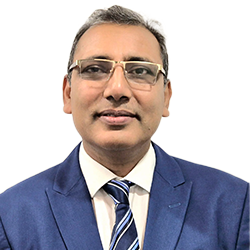
Dr. Mukesh Kumar– Chief Scientific Officer- CLINEXEL (https://www.linkedin.com/in/dr-mukesh-kumar-m-d-6223457/)
A Physician (MD) with over 25 years of deep expertise in clinical R&D, Dr Kumar’s career is a testament to innovation and excellence in clinical trials, clinical pharmacology, translational research, biopharmaceutics, and clinical development. His contributions have driven global product registrations across regulatory landscapes, including the USFDA, EMA, India, PMDA, and ROW regions.
Dr. Kumar’s illustrious career includes clinical R&D leadership roles at global pharmaceutical giants (Sanofi and Daiichi Sankyo) and large Indian pharma companies (CIPLA, DRL, and LUPIN), where he supported early and late phase clinical trials of innovative products, including repurposed drugs via 505(b)(2) path, complex generics, and biosimilars.
He has played a key role in transforming the R&D business through clinical risk mitigation strategies and high-quality clinical trial executions. With a proven track record of significant contributions in clinical development of over 100 successful product registrations in the U.S. and Europe, he has redefined efficiencies in clinical strategies by implementing cost-effective, innovative clinical trials and pharmacology studies.
As CLINEXEL’s CSO, Dr. Kumar oversees clinical trial operations (Phases I-IV) and clinical program management. His value-added support is available for CLINEXEL-managed clinical trials in optimizing clinical strategies, global clinical development, and driving impactful scientific negotiations for innovative therapies, biosimilars, and complex generics.