
Introduction: When Clinical Trials Need a Course Correction
Clinical trials rarely proceed exactly as planned. Despite rigorous feasibility assessments, protocol optimization, and careful site selection, studies can still face unexpected delays. Slow patient recruitment, high screen failure rates, operational inefficiencies, or increased competition from parallel trials can derail timelines. In such situations, sponsors often initiate what are commonly referred to as rescue trials or rescue strategies; targeted interventions designed to recover lost time and restore study momentum.
Rescue trials are not merely reactive measures; they are strategic decisions that can determine whether a development program succeeds or fails. One of the most effective approaches in a rescue scenario is the rapid expansion into new geographies with strong recruitment potential and operational readiness. In this context, India has emerged as a highly relevant and valuable region.
However, similar to its role in multi-regional clinical trials (MRCTs), India’s contribution to rescue trials must be strategic and balanced. It is not a universal solution but a powerful lever when integrated thoughtfully into a broader global recovery plan.

What Are Rescue Trials in Clinical Development?
A rescue trial, or more accurately a rescue strategy, refers to corrective actions taken when an ongoing clinical trial is underperforming. These actions may include:
- Adding new sites
- Expanding into additional countries
- Modifying recruitment strategies
- Optimizing operational processes
The primary objective is to accelerate enrollment, improve data generation, and bring the trial back on track without compromising quality or regulatory compliance.
Rescue strategies are particularly critical in late-phase trials, where delays can have significant financial and strategic implications.
Why India Is Considered in Rescue Trial Scenarios
India is increasingly considered a preferred geography when trials require rapid recovery. Several structural and operational advantages make the country well-suited for rescue strategies.
India offers access to a large and diverse patient population across a wide range of therapeutic areas. In many cases, patients may have limited access to advanced therapies, making clinical trials an important treatment pathway. This creates a favorable environment for recruitment, particularly in indications with high unmet need.
Additionally, the clinical research ecosystem in India has matured significantly. Regulatory processes under CDSCO have become more structured, and experienced investigators and sites are increasingly aligned with global standards. Clinical Research Organizations (CROs) such as CLINEXEL, working within networks like AICROS, provide the local expertise needed to rapidly operationalize rescue strategies.
India as a Rapid Enrollment Accelerator
The most significant contribution of India in rescue trials is its ability to accelerate patient recruitment. When enrollment slows down in existing regions, often due to competition, saturation, or restrictive inclusion criteria, India can provide access to new patient pools.
Sites in India are often capable of enrolling patients at a faster rate compared to many Western regions. This is driven by:
- Higher patient volumes
- Strong investigator engagement
- Efficient site networks
In rescue scenarios, this speed can be critical in recovering lost time.
However, rapid enrollment must be carefully managed. Over-reliance on a single region can lead to imbalances in the dataset, which may raise concerns during regulatory review. Therefore, while India can significantly boost enrollment, its contribution should remain proportionate within the overall study population.
Operational Agility and Fast Study Activation
Rescue trials require speed, not only in recruitment but also in study activation. India offers operational agility that supports rapid start-up, provided that regulatory and site processes are managed effectively.
Experienced Clinical Research Organizations (CROs) such as CLINEXEL play a critical role in this process. Their familiarity with local regulations, established relationships with sites, and access to pre-qualified investigators enable faster initiation of new study locations.
Infrastructure capabilities, including laboratories, imaging facilities, and supply chain logistics, further support efficient trial execution. This operational readiness makes India a practical choice when timelines are under pressure.
Cost Efficiency in Rescue Strategies
Rescue trials often involve unplanned costs, including additional site activation, extended study duration, and increased operational complexity. India provides a cost-efficient environment that can help offset these financial pressures.
Lower per-patient costs and more economical site operations allow sponsors to expand enrollment without disproportionately increasing the budget. This is particularly important for smaller biotech companies or programs with limited financial flexibility.
However, cost considerations should not override quality and compliance requirements. A balanced approach is essential to ensure that cost efficiency does not compromise data integrity.
Contribution to Data Diversity and Robustness
In addition to accelerating recruitment, India contributes to the diversity of clinical trial data. Inclusion of Indian patients introduces South Asian representation, which enhances the generalizability of study results.
Global regulatory agencies such as the U.S. Food and Drug Administration (FDA) and the European Medicines Agency (EMA) expect clinical data to reflect diverse populations. This expectation is guided by ICH E17, which emphasizes the importance of evaluating consistency across regions.
In rescue trials, where additional data is being generated to support the overall study, India’s contribution to diversity can strengthen the scientific validity of the dataset.
Regulatory Considerations in Rescue Trials
While India provides valuable data, its role in regulatory strategy remains supportive. Primary regulatory weight continues to lie with core regions such as the United States and Europe.
Data generated from India is typically included in pooled analyses and regional subgroup evaluations. The objective is to demonstrate consistency of treatment effects across populations rather than to rely solely on one region.
Sponsors must ensure that the inclusion of India aligns with the overall regulatory strategy and does not introduce variability that could complicate submissions.
Key Challenges and Risks to Manage
Incorporating India into a rescue trial is not without challenges. One of the primary considerations is variability in the standard of care. Differences in medical practices compared to Western regions can affect endpoint assessments and patient management.
Data variability is another potential risk. Differences in diagnostic criteria, reporting practices, and site experience can introduce inconsistencies if not properly managed. Rigorous training, monitoring, and quality control are essential to mitigate these risks.
Regulatory perception must also be considered. If a large proportion of additional patients are recruited from India during a rescue phase, regulators may scrutinize the data more closely to ensure that results remain generalizable.
These challenges highlight the importance of careful planning and execution when integrating India into rescue strategies.
Best Practices for Including India in Rescue Trials
A structured approach is essential to maximize the benefits of including India in rescue trials. Sponsors should focus on selecting high-performing sites with proven experience in global studies. Rapid feasibility assessments, led by experienced clinical teams, help identify sites with strong recruitment potential.
Balanced enrollment across regions should be maintained to ensure data consistency. India should complement existing regions rather than dominate the dataset.
Close collaboration with local CROs and investigators ensures adherence to protocol and quality standards. Continuous monitoring and proactive issue resolution are critical to maintaining study integrity.
India’s Positioning in Rescue Trial Strategy
In rescue scenarios, India is typically positioned as a high-impact, high-enrollment region that supports recovery of timelines. It complements existing geographies by providing access to new patient populations and enabling faster recruitment.
India is rarely the primary regulatory driver in rescue trials but plays a crucial supporting role in strengthening the overall dataset and ensuring the timely completion of the study.
Conclusion: A Strategic Lever for Recovery
Rescue trials are a critical component of modern clinical development, providing a pathway to recover timelines and protect the value of development programs. India has emerged as a powerful enabler in this context, offering speed, efficiency, and operational flexibility.
However, its value lies in strategic integration rather than standalone use. By aligning India’s strengths with global regulatory expectations and ensuring balanced representation across regions, sponsors can effectively leverage the country to accelerate recovery without compromising data quality.
With the support of experienced partners such as CLINEXEL and global networks like AICROS, India can play a decisive role in turning around underperforming trials and bringing critical therapies to patients faster.
Frequently Asked Questions (FAQs)
What is a rescue trial in clinical research?
A rescue trial refers to strategies implemented to recover an underperforming clinical trial, typically by adding sites or countries to improve recruitment and timelines.
Why is India used in rescue trials?
India is used to accelerate patient recruitment, reduce costs, and provide access to large patient populations.
Does India play a primary regulatory role in rescue trials?
No, India typically plays a supporting role, with primary regulatory focus on regions like the US and EU.
What are the risks of including India in rescue trials?
Risks include variability in standard of care, potential data inconsistencies, and regulatory scrutiny if over-represented.
Which guideline is relevant for multi-regional data in trials?
The ICH E17 provides guidance on global trial design and consistency across regions.
Authors:

Dr. Deepa Arora- CEO- CLINEXEL (https://www.linkedin.com/in/deepaarora2019/)
Dr Deepa is a physician with 25+ years of industry experience in leadership positions with pharma in Clinical Development, Medical Research, and Drug Safety departments.
Dr. Deepa led an industry consortium for the implementation of additional risk minimization measures in Europe. Her experience includes the development and execution of clinical development strategy and conducting clinical trials for NCEs, biosimilars, vaccines, complex generics, and repurposed drugs.
Deepa has experience in interacting with various regulators- USFDA, EMA, MHRA, MEB, Health Canada, WHO, TGA for scientific advice, pre-IND meetings, end of phase meetings to discuss clinical development path, clinical trial designs, and post-marketing commitments, including PMS/ Phase IV studies and paediatric investigation plan (PIP).
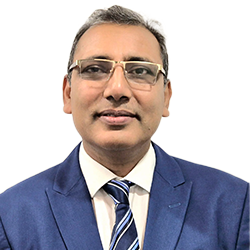
Dr. Mukesh Kumar– Chief Scientific Officer- CLINEXEL (https://www.linkedin.com/in/dr-mukesh-kumar-m-d-6223457/)
A Physician (MD) with over 25 years of deep expertise in clinical R&D, Dr Kumar’s career is a testament to innovation and excellence in clinical trials, clinical pharmacology, translational research, biopharmaceutics, and clinical development. His contributions have driven global product registrations across regulatory landscapes, including the USFDA, EMA, India, PMDA, and ROW regions.
Dr. Kumar’s illustrious career includes clinical R&D leadership roles at global pharmaceutical giants (Sanofi and Daiichi Sankyo) and large Indian pharma companies (CIPLA, DRL, and LUPIN), where he supported early and late phase clinical trials of innovative products, including repurposed drugs via 505(b)(2) path, complex generics, and biosimilars. He has played a key role in transforming the R&D business through clinical risk mitigation strategies and high-quality clinical trial executions. With a proven track record of significant contributions in clinical development of over 100 successful product registrations in the U.S. and Europe, he has redefined efficiencies in clinical strategies by implementing cost-effective, innovative clinical trials and pharmacology studies.
As CLINEXEL’s CSO, Dr. Kumar oversees clinical trial operations (Phases I-IV) and clinical program management. His value-added support is available for CLINEXEL-managed clinical trials in optimizing clinical strategies, global clinical development, and driving impactful scientific negotiations for innovative therapies, biosimilars, and complex generics.